
You’re listening to your music, cruising, when traffic suddenly seems to pile up before your eyes. Two lanes become four with cars trying to merge constantly. There are traffic signals with green arrows pointing down, but there’s a red ‘X’ over your lane.
It’s absolute chaos.
And if you’ve ever driven in DC before, you’ll know that this is all completely normal. The rules of the road change the second the clock hits 4 pm, as people leave their jobs and try to make it home with enough time to eat and sleep before they do it all over again the next day.
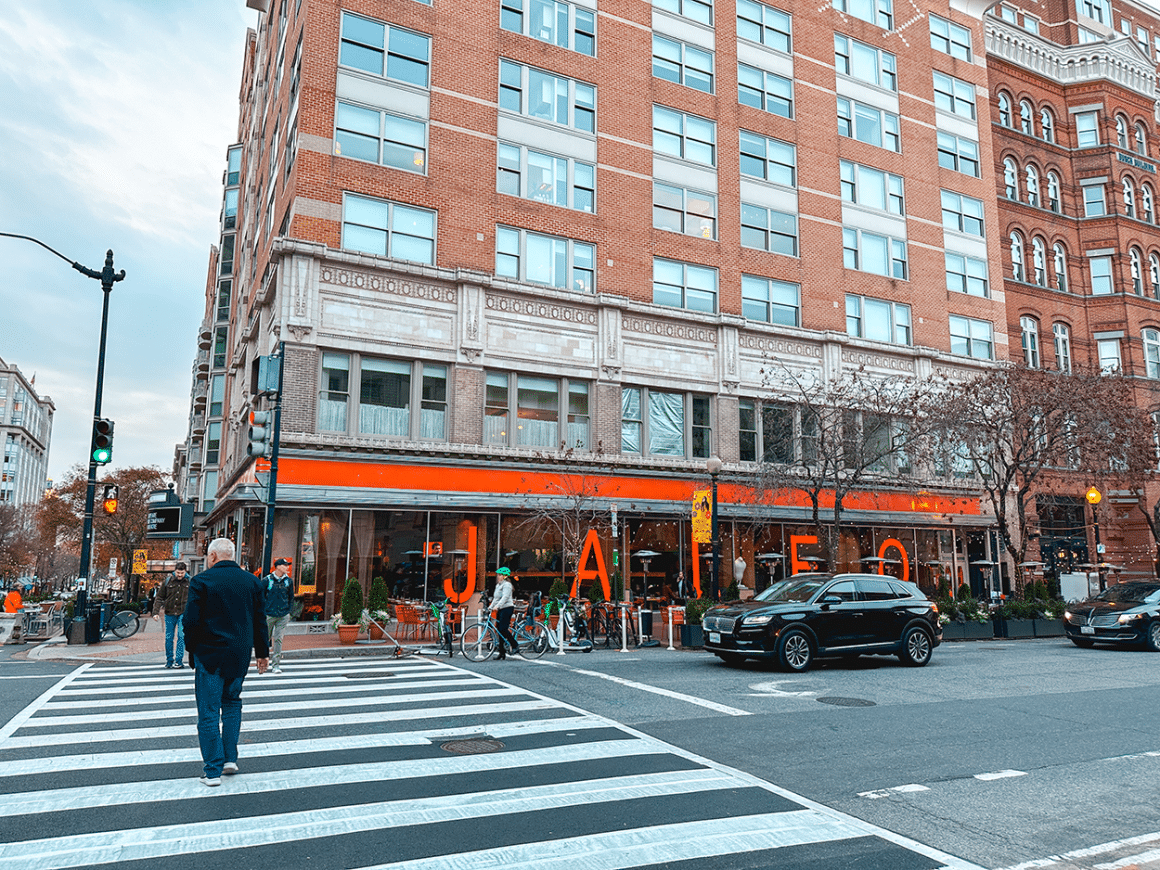
Traffic patterns change. Police officers are pulling you over for being in an HOV lane that magically appeared out of thin air.
Let’s not get started on that fourth speeding ticket you just got, and not a single cop was there to give you the ticket – but we will get to my friend the speed camera in a second. We know each other well.
For now, let’s go over what you, the innocent visitor, need to know before you come to our nation’s capital on your Washington DC trip.
Maps are Your Friend
I’m not talking about the old-school origami maps you used to buy from the gas station. Apple Maps, Google Maps, Waze. No matter what navigation app you prefer, use it while you’re in DC.
Google Maps is my weapon of choice for several reasons, the main one being that you get real-time traffic updates that are crowdsourced by users. And if you find yourself stuck in traffic, it is also great at showing you immediate alternate routes that you could take.
Other reasons include:
- The street view option (perfect for figuring out the parking situation in advance).
- You can download directions for offline use.
- There are detailed directions not only for driving but also for walking, biking, and public transportation.
Side note, while I am 100% team Google Maps, I do have to admit that Waze has the best alerts for speed cameras and police parked with speed guns.

Go Old School with WTOP
WTOP is an all-news radio station that serves the DC community, and they’ve been on air since 1943 – which is saying something since it’s more common for us to have headlines sent to the palm of our hands the instant that they happen.
You can listen to all of the DC-related breaking news, traffic, and weather information 24/7 with WTOP by tuning into 103.5 FM.
Worst Times to Drive
Rush hour is a real thing in Washington DC and should not be ignored. We actually watch, listen, and devour the traffic report around here. There are always six ways to get where you need to go, and five of them are blocked by congestion, an accident, or someone spilling their morning latte.
Mornings between 6:00 AM and 9:30 AM, and evenings between 3:30 PM and 6:30 PM, are the absolute worst times to drive around DC. These are the times people are getting to or coming from work, and traffic will most likely come to a standstill.
Keep in mind that traffic is always worse on Tuesdays through Thursdays, probably because people most often call out of work on Mondays and Fridays to extend their weekends.
Two Lanes will Suddenly become Four
Because of how DC is laid out, and with the need to make more lanes in certain places for traffic to move, you may find that the two-lane road you were on suddenly became four with cars merging in and out from every which way.
Do not panic – though that’s usually everyone’s first reaction.
Some of the worst merge lanes in the DC area include:
- 9th Street Tunnel to the Southwest Freeway East
- George Washington Parkway South to I-395 North
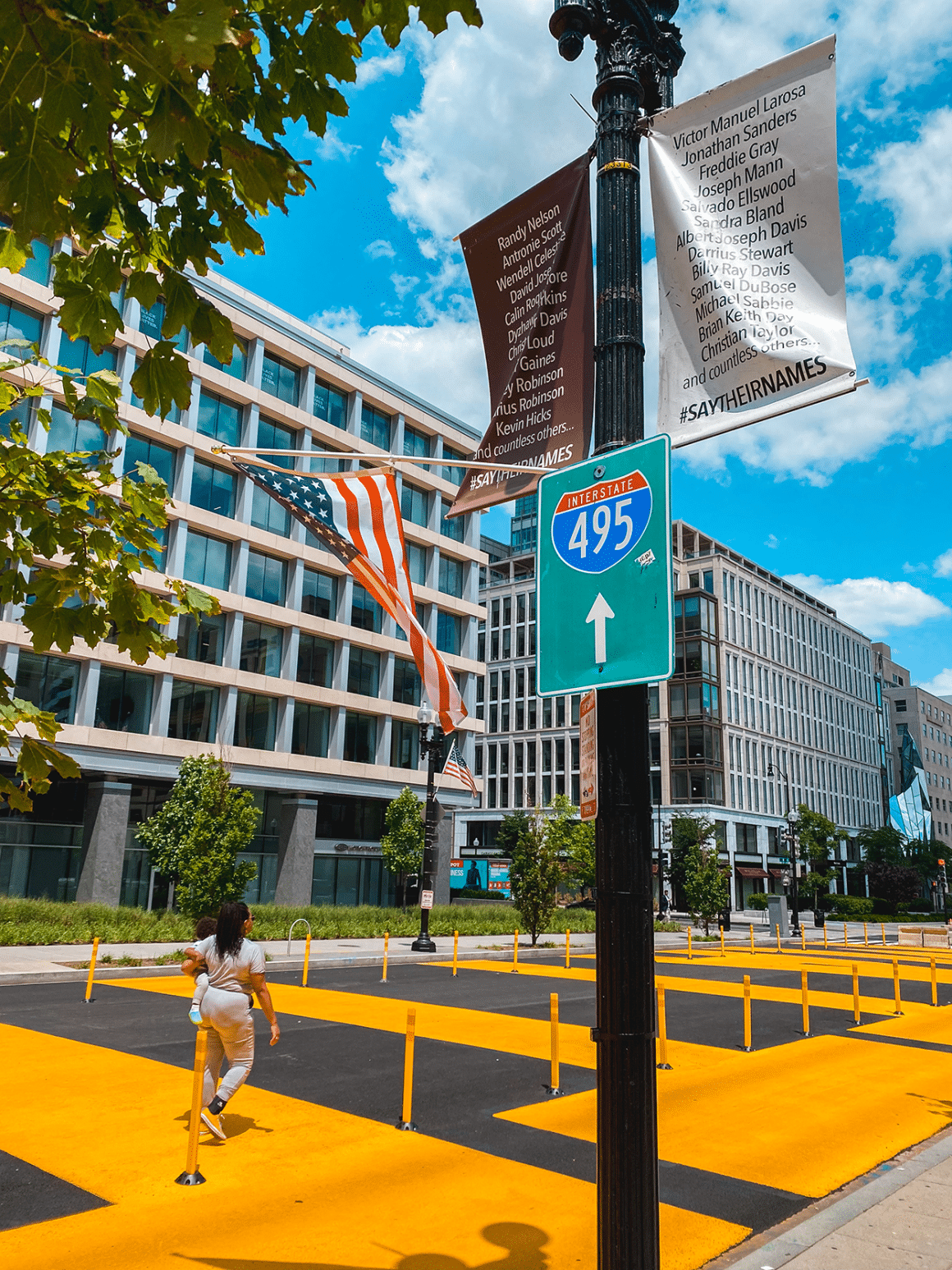
- I-495 East to New Hampshire Avenue
Just keep in mind to use your turn signals, adjust your speed, check blind spots, and wait for a suitable gap to join the Washingtonians.
Local Traffic Laws
In addition to commonplace traffic laws such as no littering while driving (or at any time for that matter), knowing a few of these local traffic laws may prove useful to those who are not familiar with driving in DC.
It is illegal to use a handheld phone while driving in DC, so no texting and no holding up the phone to your ears for calls. Drivers are encouraged to use hands-free devices or have their phones connected to their car’s entertainment system.
Slow down when driving through construction zones; speed limits are significantly lowered when construction is occurring for the safety of all those involved. Keep in mind that pop-up speed cameras are usually set up in these areas, and the fines are double.
Other traffic laws to keep in mind include:
- Obscene gestures such as flipping the bird are considered aggressive driving, and you may be fined or even jailed for it.
- You cannot stop, stand, or park in bicycle lanes unless you’re making a right or parking in a legal space.
- Pay attention to red lights and the traffic in front of you because if you block an intersection, you may get into trouble.
Speed Cameras and Red Light Cameras
The traffic cameras in Washington DC bring in nearly $150 million in revenue annually, and I may have contributed at least half of that.
In addition to speed cameras, there are red light cameras, construction cameras, bus lane cameras, stop sign cameras, and wedding event cameras. Okay, I made that last one up, but you get the point. DC loves cameras.
Some cameras in DC that generate the highest revenue include:
- I-295 (half a mile south of Exit 1)
- Potomac River Freeway and 25th St NW
- K Street Tunnel (eastbound and westbound)
- 16th Street St NW

HOV Lanes are Serious and Cops Will Get You
HOV lanes are there to encourage ridesharing and reduce traffic, and if you are found taking advantage of the higher speeds and clearer lanes that HOV may get you while driving alone, there may be consequences.
You usually need to have two people in the car, including the driver, to be able to drive in the HOV lane in DC (HOV2+). Certain places are HOV3+, so keep that in mind as well. On that note, babies do count, so use that how you see fit.
HOV lane restrictions are usually enforced during certain times of the day (rush hour). If you do not follow them, there is a $90 fine, and a point may be added to your driver’s license for each offense.
Popular HOV lanes in the DC area include I-66 express lanes, I-95 and I-395 express lanes, and the Dulles Toll Road.

Parking in DC
There are several parking laws in Washington DC, and if you ignore them, you may find yourself with a hefty fine, or worse, your car being towed.
Meter parking is usually enforced from 7:00 AM to anywhere between 6:30 PM and 10:00 PM, depending on the location.
It is free overnight and on Sundays. Rates average at $2.30 per hour.
You can park in residential neighborhoods without having a zoning permit for a maximum of two hours between 7:00 AM and 8:30 PM, Monday through Friday. This does not apply to specifically mentioned Resident Only Zones.
Do not, under any circumstances, obstruct the entrance to service gates, parking garages, and main entrances to hotels and businesses unless they have designated parking there.
Parking Apps
Parking apps such as SpotHero, ParkWhiz, and ParkMobile are very popular in DC and will make it so much easier to find and pay for parking.
After all is said and done, do not be intimidated by driving in DC. Just remember, use your traffic signals and you’re already one step ahead.
When all else fails, take the D.C. Metro or a bikeshare.
